Sunday, February 26, 2017
Weighing the Differences
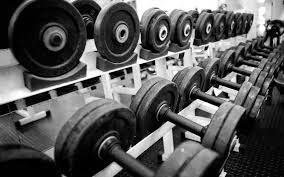
There was a time when I made the decision to drop in the school weight room. A friend of mine had created a new workout routine, and I wanted to try it out (cuz working out after school is obviously more worthy than taking a nap and watching Netflix). Anyways, as I walked in that day, I immediately got stares from all corners of the room as if I stepped into wrong territory. Nonetheless, I followed through with most of the routine. However, I found myself staying away from the actual weight machines and making do with the dumbbells and elliptical. The boys were all "solid piles of rocks" as they huffed and puffed, all benching 100+. That experience was eye-opening for me. Looking back I now wonder why and how the weight room became such a gendered spot. Is it because girls simply don't prefer going to the weight room? Or is it because girls feel pressured not to go to a weight room due to its "masculinity"? It is evident that there are different parts of the body that are seemingly more important to each gender. For men, they should focus on a six-pack, biceps, and overall triangular body shape. While girls look mainly at their chest, butt, waist, and overall hourglass figure. This is probably why you hardly ever see girls at a weight room because a yoga mat at home can do the job. It is nonsensical to have these standards placed on men and women. It only seems right that men build muscle and girls keep slim. However, men and women can have similar fitness goals. There is no set routine or machines more suitable for either gender. Society tends to deflect that subject by pointing out the physical differences between the sexes. Since people help push for this standard, there is a loss of individualism. Men and women are so fixed on achieving the perfect body and living up to societal standards in general. People don't even question why that ideal is ideal. We live in such a diverse world, but it'd be nice if we could actually see the variety in people: externally and internally.

Sunday, February 19, 2017
Let's Think a Little
In Joan Didion's "Marrying Absurd", she mocked how the people in Vegas were way too caught up in the moment, marrying "one bride out, another in, and again." The fact that people were willing to get married in these short, informal fashions that only cost couple bucks is one thing. But the fact that there are businesses that aid them in doing so is absolutely preposterous. Those that go as far as to create these type of weddings are diminishing a prominent symbol of love. This kind of business is the epitome of America's consumerist culture. The people that embrace this country's consumerism take such a memorable moment in a person's life and not only markets it, but also markets it based on convenience with "show girls and baby Crosbys". America's consumerist culture is also visible in Jennifer Price's "The Plastic Pink Flamingo". Dating back to the early 1900s, America has already been working towards building the consumerism that is present today. America was able to manipulate and raise the popularity of a simple, pink bird and label it as "The Plastic Pink Flamingo" just to satisfy the consumerist needs. From there, America was able to create plastic souvenirs, pink souvenirs, and flamingo souvenirs. How convenient is that, am I right? As businesses are getting more greedy and citizens are getting more drawn to follow bandwagons, this consumerist culture will continue to plague our country. It is evident America circles around this consumerism and it's been a large part of our culture for a while, but this materialistic culture has gotten to a point where people no longer focus on the "Natural" but just the "plastic".
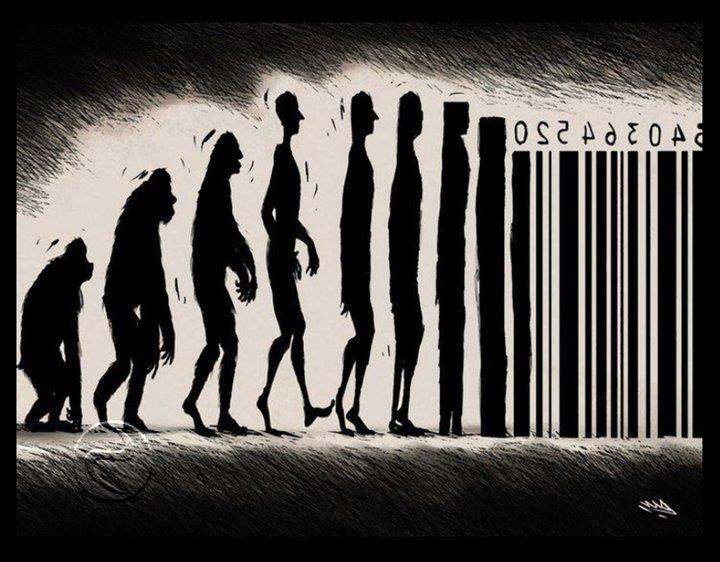
America needs to open it's eyes to the real world and start thinking about subjects that actually matter.
Sunday, February 12, 2017
Eat A Cake
After reading Horace Miner's piece Body Ritual Among the Nacirema, I was enlightened by an idea I never really gave much thought to. He writes about the barbaric practices of the primitive Native Americans. He discusses how the people follow these rituals of the Nacirema without much reason. Their "unique" mouth-rites are just "daily body ritual[s]" performed by everyone. Miner also points out their obsession over their shrines. This is parallel to the various day-to-day "rituals" we Americans practice today. In fact, Nacirema is just American spelled backwards. From there, it can be concluded that Miner's purpose was to mock the hygiene, medical, and daily life practices in our American culture today.


Humans spend hours a week in their shrines, or bathrooms, to clean up in their "holy water," brush their teeth with "certain magical powders" on a "small bundle of hog hairs." The significance of teeth hygiene is crazy in our society. We have rows after rows of different types of toothpaste(fluoride toothpaste, anti-calculus toothpaste, whitening toothpaste, anti-plaque toothpaste, etc.) sold in our stores. We go to our dentists routinely for mere check-ups. Also we blindly accept our medicine and prescriptions from our "medicine men." There's so much medicine that we just use because it's prescribed. This exemplifies how we humans are oblivious to our surroundings and just follow through because those acts are commonly practiced.
Even though we appear to be much more civilized than the Nacirema, the practices we follow have the same foundation. People should stop being so stressed about looking good and maybe pay a little more attention to the "why's" or other enjoyable highlights in life, like eating desserts :)) (I tried)
Sunday, February 5, 2017
Daddy's Little Girl
It was another serene evening in our suburban neighborhood. Outside, you could hear the occasional laughter of children playing tag and barks of dogs excited about a passing ice-cream truck. We all had our fill of stew and rice. Despite, our full stomachs, we couldn't miss out on the red-orange sunset in the air. I was too little, too imbalanced to ride on my own set of wheels. In order to capture the moment, I surrendered myself in the backseat of my father's bicycle and felt the wind run through my petite fingers. My father's strong grip on the handlebars navigated us down street after street. There were times when I would squirm impatiently because I wanted to get a clearer picture of Mother Nature around us. But no, it was always the "sit back or you'll fall". My curiosity settled inside me with burning intensity. I didn't understand why I couldn't be in control, why I couldn't explore what my father has been exploring for decades. I never thought it was fair. My father would continue to smile, while breathing in the night air and telling me his insightful views on life, which I took for granted and hardly listened to at the time. Trip after trip, I would get restless about not being in control of the wheels. I'm not sure when the fire of defiance in me burned out. I was no longer the anxious toddler. Until one day, my father presented me with a bike of my own. I was overjoyed and climbed on to finally go on my own journey. After a few pedals, I heard scratches behind me. It cut through the supposedly calm state of a bike ride. Training wheels. I never felt more challenged to show that I could bike like my father. During the period of time I was trying to master the training wheels and gain enough speed to prove my worth, I totally disregarded the usual bonding time I had with my father. Seasons changed along with my bike. It was only a set a wheels I saw on my bike one evening. I was ready. I took off shakily at first but learned to grip strong and move forward. At that moment, I caught a glimpse of my father on our driveway. He looked at me and smiled, but I "sensed a different message." My desire for control escaped me during those seconds. I stopped pedaling and let the wheels carry me forward, farther away from my father. It wasn't only the physical distance between us increasing; I knew it was time for him to let go of his grip on the handlebars and allow me to take over. It was then when I realized that my father's "stay back or you'll fall" was always to protect me, not to confine me. Part of me didn't want to make it to the end of the street because I knew some day I would no longer be daddy's little girl.

Subscribe to:
Comments (Atom)