However, as we read The Raisin in the Sun, I began to notice that that quote doesn't apply to the Youngers. Walter aimed to open a liquor store in order to turn his and his family's life around and get them out of their "beat-up hole." Beneatha was all over the place, trying to do something most girls didn't do at that time: become a doctor. Mama simply wanted be able to live in her own house with her family. They all did have a plan to achieve their goals, but obstacles they could not avoid prevented them from reaching them. Their financial status and their social class and their skin color were all prominent obstacles that held them back. Their opportunities were limited to a "circle", as a matter of fact. Walter who has been a chauffeur his whole life was eager to escape those chains locked down by the whites. His longing for an opportunity to make a change only resulted in him getting completely scammed. His connections are shady and limited due to his black status. Beneatha was also confined because of her black woman status. Getting good education and being able to pay for it is already such a struggle for her. Her gender only added diminished her circle to smaller size. Her goal of becoming a doctor was looked down upon as too ambitious for her own good. Beneatha ended up loosing grasp of her dream due to the inevitable obstacles she knew she faced. Beneatha, who didn't care much for marriage, began to look favorably upon Asagai's future plan with her in Africa. At the end, the Youngers had to settle with only fulfilling Mama's dream, and they smiled on because at least they had family. The blacks keep running in a circle, unable to reach their dreams, and eventually believe that they don't have much of a choice but to appreciate the little they can have. Their mindsets run in a circle not because they're "realists," but because they don't have a choice. Discrimination and white supremacy still continue to serve as leashes in society, as was seen in the Supermarket video. Opportunities are unevenly distributed to all the races so often that people aren't even surprised to see it happen anymore. The individuals who use their privileges in order to make statements and bring justice should be applauded. They are the people's heroes. But I wonder, even with those fighting, will we ever have absolute equality, or will we have to continue to settle and appreciate our society's imbalance.
Sunday, December 18, 2016
Our Imbalance, His Circle
Sunday, December 11, 2016
Do you Wanna Build a Snowman?
Looking at the two most recent Fitzgerald pieces we've read, there is a recurring theme throughout both stories. Materialism is a form of blinding corruption which ignites inevitable destruction and, consequently, leaves no memorable trace of existence. Humans tend to be attracted by greed and wealth. That tendency is evident in both the Great Gatsby and The Diamond as Big as the Ritz. Gatsby and Braddock were both blinded by their dreams of achieving ultimate wealth. While Gatsby's dream was directed in his pursuing of the wealthy and beautiful Daisy, Braddock's dream was reflected in his preservation of his family secret: the diamond mountain of wealth. His aim was to continue the legacy as the "richest man in the world." They were overwhelmed by their own goals, and their own greed eventually took them over.
Materialism is seen everywhere in society today. Teens come back from Black Friday and go around saying things like, "Hey! Look who just got the iPhone 6s!" "I wasn't sure whether to get those brown Uggs or the Hunters" "Ooo I love the parka in your Instagram pic!"People are so focused on material needs these days and forget to address the values that are actually important in life. Not only teens, but also adults try to fit in the material standards society has created. People don't want to be labeled as cheap or the less rich. If society doesn't inflict this standard on us, would people still want to have the hottest new phone or boots? Probably not. Similarly to beauty standards, wealth and material standards place people into classes of various levels to assume dominance over the inferior. In celebration of the first snow day of this school year, why don't we all drop our phones and go out to build a snowman!
Sunday, December 4, 2016
It's all a Blur
The Roaring 20s was a time filled with mass culture, the Jazz Age, a consumer society, the "New Woman" aka flappers, and just an overall boost in wealth and materialism. A passage on page 40 in The Great Gatsby clearly portrayed the key aspects of this time period.
"By seven o’clock the orchestra has arrived—no thin five-piece affair but a whole pitful of oboes and trombones and saxophones and viols and cornets and piccolos and low and high drums. The last swimmers have come in from the beach now and are dressing upstairs; the cars from New York are parked five deep in the drive, and already the halls and salons and verandas are gaudy with primary colors and hair shorn in strange new ways and shawls beyond the dreams of Castile. The bar is in full swing and floating rounds of cocktails permeate the garden outside until the air is alive with chatter and laughter and casual innuendo and introductions forgotten on the spot and enthusiastic meetings
between women who never knew each other’s names."
With the introduction of an orchestra, a feeling of elegance and class is given off. The full orchestra with various instruments displays the wealth flaunted at parties during this time. Many people were earning easy money off the stock market and living to their fullest. Also the scene with swimmers coming back from the beach before prepping for the party produces a casual and laid back mood in addition to the classiness and glam. The people knew how to enjoy themselves and let loose with dancing and wine, but at the same time they knew to act in accordance to their social class when events such as parties came. The "primary colors" portray how everyone wanted to be the first. They wanted to be known as the originators of whatever is was. The wanted to be the red, blue, and yellow of the party, not the orange, magenta, or green that are only the secondary colors. Their shawls are so great that those of Castile can only dream of it. This again shows their abundance of materialism. Everything is just a blur as the round of cocktails float in; people who see each other greet each other for the sake of formality and forget on the spot. This whole lavish scene of Gatsby's party captures the epitome of parties and the blur of human morality during the Roaring 20s.
"By seven o’clock the orchestra has arrived—no thin five-piece affair but a whole pitful of oboes and trombones and saxophones and viols and cornets and piccolos and low and high drums. The last swimmers have come in from the beach now and are dressing upstairs; the cars from New York are parked five deep in the drive, and already the halls and salons and verandas are gaudy with primary colors and hair shorn in strange new ways and shawls beyond the dreams of Castile. The bar is in full swing and floating rounds of cocktails permeate the garden outside until the air is alive with chatter and laughter and casual innuendo and introductions forgotten on the spot and enthusiastic meetings
between women who never knew each other’s names."
With the introduction of an orchestra, a feeling of elegance and class is given off. The full orchestra with various instruments displays the wealth flaunted at parties during this time. Many people were earning easy money off the stock market and living to their fullest. Also the scene with swimmers coming back from the beach before prepping for the party produces a casual and laid back mood in addition to the classiness and glam. The people knew how to enjoy themselves and let loose with dancing and wine, but at the same time they knew to act in accordance to their social class when events such as parties came. The "primary colors" portray how everyone wanted to be the first. They wanted to be known as the originators of whatever is was. The wanted to be the red, blue, and yellow of the party, not the orange, magenta, or green that are only the secondary colors. Their shawls are so great that those of Castile can only dream of it. This again shows their abundance of materialism. Everything is just a blur as the round of cocktails float in; people who see each other greet each other for the sake of formality and forget on the spot. This whole lavish scene of Gatsby's party captures the epitome of parties and the blur of human morality during the Roaring 20s.
Saturday, November 26, 2016
The Mysterious Green Light
As we begin our journey into the novel The Great Gatsby, one of the main ideas introduced is the difference between West Egg and East Egg. West Egg was the area of New Money and the "less fashionable of the two." The people tend to be lavish, flashy, yet innocent in the material world. On the other hand, East Egg was the area of Old Money. They were the aristocrats who were more formal and absorbed in the material corruption. Then there is the Valley of Ashes which runs between the two sectors. The Valley of Ashes represents the corruptness of society where the outcasts are pushed down from the ongoing consumerism and modernism. The people there have not yet found their proper place or rather can't find their proper place. That is also where Tom Buchanan met Myrtle and began their love affair. As people pass through this valley, especially from the West Egg, they experience and learn of this darkness. It seems as if the Valley is the bridge the humans cross through their lives, through the peril and evil. As they reach the end of the bridge and step onto the East Egg, they will have become a new person with blinded by the greed and no longer possess true morals and a sense of humanity. People like Nick and Gatsby are now naive characters just introduced into this world of wealth and economy. However, pretty soon they will be driven by greed and the widening gap between the rich and poor to embark further in their economic gains. In addition to this, at the end of first chapter, the mysterious man, Gatsby, was "trembling" while staring out at a "single green light" across the dark waters. He may have been looking out at the East Egg from his land. This foreshadows how the green light may be the material and corruption beckoning him to cross over the dark waters to the other side, or the East Egg.

Sunday, November 20, 2016
Why an Imaginary Friend
Sunday, November 13, 2016
A Thousand Years of Twigs Make a Great, Big Tree
Sunday, November 6, 2016
Peanut Butter & Jelly Sandwich
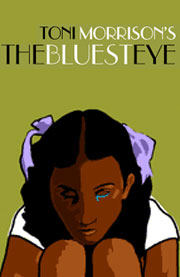
First full day of first grade began on a bright, sunny day. I was excited yet nervous to see Schroeder elementary and what it has to offer. The teacher was very inviting and I got to know some other kids. One thing I noticed was that I didn't look like most of the other students. A lot of them had blonde hair with blue eyes or brown hair with green eyes. I, on the other hand, had black hair and dark brown eyes. Some of those blue-eyed and green-eyed kids stared right at me. I wasn't quite sure at that time what it was their faces were saying. Everything else seemed to be alright, until lunch time came. I opened my bowl of rice and other Chinese foods. Instantly, I got glances from the people around me. They just glared at my food and me, then whispered silently among each other. I could feel their looks as I look down at my food. Then, I noticed a lot of the people around me grab out what I later realized was a peanut butter and jelly sandwich. It's a combination of peanut butter which was a sweet and salty mix, and jelly which is a very sweet jam of fruit. Not to offend those P&B sandwich lovers out there, but I never quite understood the greatness of that kind of sandwich. A big part of this is probably because of my background and what I was exposed to as a kid. This is parallel to The Bluest Eye's main character, Claudia's, trouble in understanding what is so lovable about dolls. She was confused by those "blue-eyed, yellow-haired, pink-skinned" dolls, which apparently was deemed as beautiful and only for those "worthy" of them. She could not see past the "turned-up nose", "blue glassy eyeballs" and "yellow hair." What about those characteristics made the doll so beautiful? What about a sandwich with peanut butter and jelly together made it so great. So ideal...So normal...
I won't deny that I felt a wanting, a need, to be like the other kids. I didn't want to stick out so much. I wanted to have a lunch similar to them to seem normal, to end the weird looks. That was the me years back. I am now in a very diverse community. My high school is filled with so many different ethnicities and backgrounds. I was able to understand that it is okay to eat different foods. It is okay to be different. It is okay to look different. Everyone is different and it's the differences that make us special and make us human. I mean after all, a P&B sandwich does take two very different items and combines them to become such a masterpiece.
Sunday, October 30, 2016
I'm NOT a Barbie Girl, In a Barbie World, Life in Plastic, It's UNfantastic
With this mindset, generations have pushed the message of how women can the pretty wife of the king but never his queen. So yes, society has been trying to push women's femininity with things like heels, boobs and butt, petite features, BARBIES. To be honest, I was never a fan of barbies. They're just so rigid and hard, and their limbs are removable... If you wanted to stress how women are soft and dainty, why go and create some hard, plastic toy? They seem pretty masculine to me, which is ironic because even a toy meant for girls isn't able to speak for girls. Also, they hurt when you accidentally step on them. This resembles how women aren't fully able to express themselves freely and are stepped on even though they are not meant to be.
Seeing as to how this issue still persists today, we cannot just "Keep Calm and Love Jesus" because this is a problem society has induced itself. Everyone needs to find their way out of "Barbie's world."
Saturday, October 22, 2016
Who Am I?
All of these definitions, classifications, and identifications are all drawn by society. People come to a general agreement to create "order." This allowed people to understand each other better, but gave people power over each other, as well. But the thing is, human perception and belief are always fluctuating so nothing is truly set. If we take off our masks and remove the binds that define us, we all are just human beings. However, no one can be sure about who they are because for all we know, it's possible we can wake up one day as a different person, labeled with a different name.
Sunday, October 16, 2016
Mix of The Past and Present
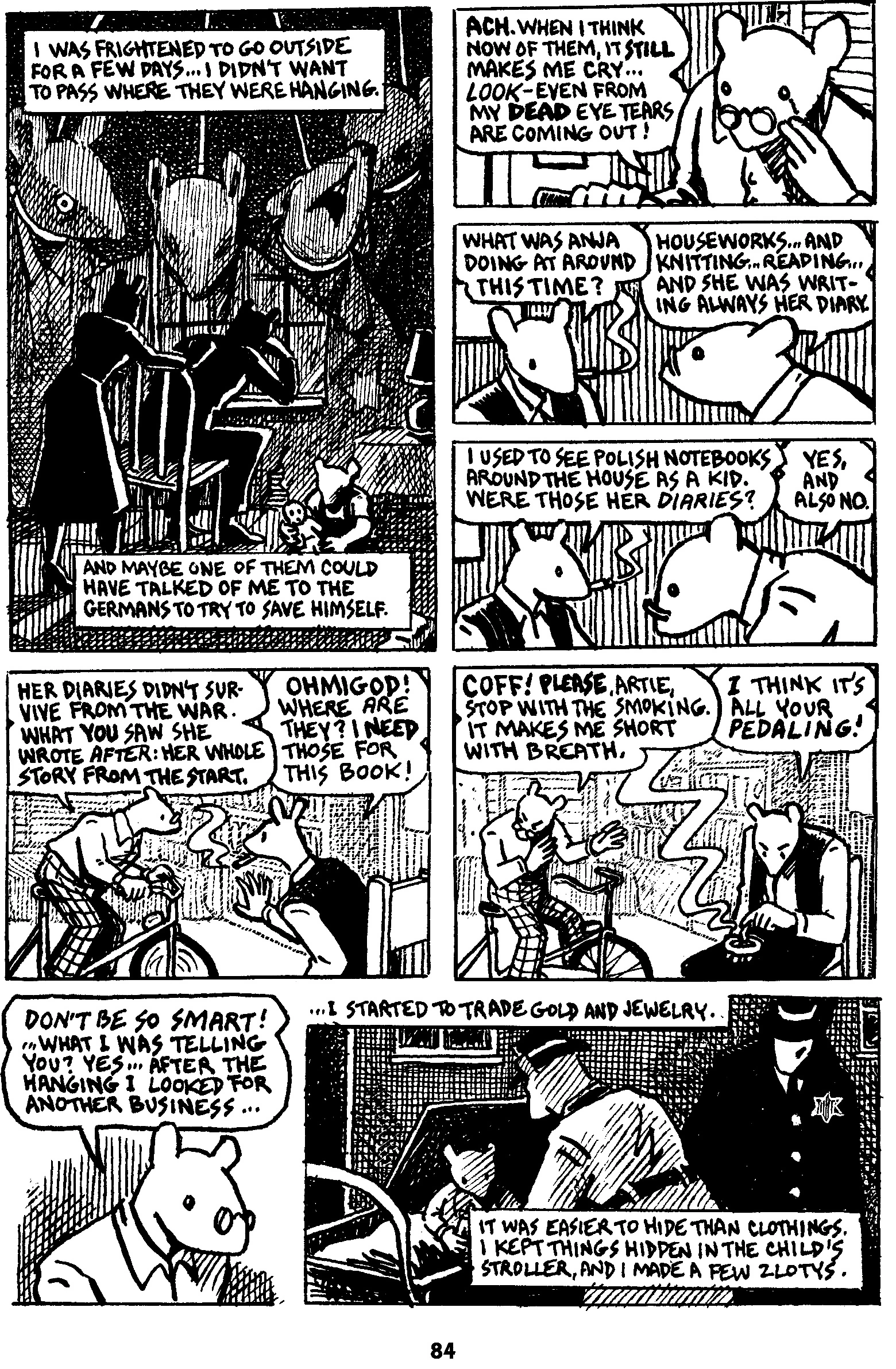
In Spiegelman's graphic novel Maus, the panels closely followed both the past and present. Of course, there is a clear gap between the past and present in our measure of time. However, Spiegelman disregards the line drawn between the past and present and understood "how to use every available centimeter to get as much stuff packed into a small space as possible" (Chute). Throughout the novel, the panels shift back and forth from Vladek's history to the present where Art is listening in on his father's survivor tale. Placing panels of the past and present strengthens the general story. This shows how the past and present are always surrounded by each other, separated only by the thin borders of each panel. Sometimes the present is literally bordered by panels of the past. The present revolves inside the events of the past. There is an impact, which can be seen in Vladek's changed personality and view of the world, and in his almost irritable way of retelling his gruesome story to his son. Without both the past and present, the perspective portrayed within the scenes of the Holocaust and Artie's questioning and understanding of that past wouldn't exist.
In addition, smoke is a significant symbol in regards to the idea connecting the past and present. In one scene, as Vladek is talking to Artie, he complains at the smoke from Artie's cigarette. Smoke is a hazy and cloudy substance with gas and particles. It blurs ones vision but doesn't impair it like darkness would. This aligns with the idea of how the past and present aren't so distant. Vision isn't so clear between the past and present because one is history and one is the living outcome of the history. However, the impact the past has on the present allows for slight vision like in smoke.
Another way that cigarette smoke plays a role in this concept is how Art's father "bleeds history". The smoke is a form of release which is similar to bleeding. Vladek is irritated by the smoke which is parallel to his uneasiness when retelling his horrid past. Vladek from the past is bringing his life into the present, while Art from the present is digging up and rebuilding the past.
In addition, smoke is a significant symbol in regards to the idea connecting the past and present. In one scene, as Vladek is talking to Artie, he complains at the smoke from Artie's cigarette. Smoke is a hazy and cloudy substance with gas and particles. It blurs ones vision but doesn't impair it like darkness would. This aligns with the idea of how the past and present aren't so distant. Vision isn't so clear between the past and present because one is history and one is the living outcome of the history. However, the impact the past has on the present allows for slight vision like in smoke.
Another way that cigarette smoke plays a role in this concept is how Art's father "bleeds history". The smoke is a form of release which is similar to bleeding. Vladek is irritated by the smoke which is parallel to his uneasiness when retelling his horrid past. Vladek from the past is bringing his life into the present, while Art from the present is digging up and rebuilding the past.
"I want to tell your story, the way it really happened" (Spiegelman 23).
Sunday, October 9, 2016
Everyone Woman Can Be a Warrior
Take a look at today's world. Cities, towns, and villages are bustling with determined women who seek their dreams and goals. Women all around the world are now taking on jobs which were once known as "men's work". A true warrior woman is someone who can climb high with their ambitions and not forget to cherish love/hold on to family.
![]() |
| Warrior woman's matchmaker grandma doesn't fail to remind her of another importance - love & family |
Sunday, October 2, 2016
Journey Out of Political Darkness
the political direction and control exercised over the actions of the members, citizens, or inhabitants of communities, societies, and states; direction of the affairs of a state, community, etc.; political administration
This is the definition of government given by dictionary.com.
Government is body meant to congregate the ideas of the public and to listen to
the people they serve. However, today government has taken a wrong turn and
failed to complete its purpose. As stated in "On the Duty of Civil
Disobedience", the government now embodies "friction" created by
injustice created in society over time. Government should be a country's
pillars of support, a country's field of vision, a country's listening ear, a
country's voice. In reality, our country has been ignoring the consent of its
citizens and has been overstepping its use of power. It has become a machine
that mechanically produces products -- politicians or soldiers -- to serve for
its own selfish purposes. This disconnection between our country and us
citizens destroys the message of a united nation.
The part that has actually gone wrong is the people's
unwillingness to speak out. Some people are even worse that; they would be
dragged around like a doll, following along just because they have nothing to
say. Thoreau brings this crucial issue to the table through his words. "It
is not a man’s duty, as a matter of course, to devote himself to the
eradication of any, even the most enormous wrong; he may still properly have
other concerns to engage him; but it is his duty, at least, to wash his hands
of it, and, if he gives it no thought longer, not to give it practically his support"
(Thoreau). Of course, our country needs to rid of this egotistical quality the
government possesses. But first of all, we need to cut down the numbers of
people who make choices without using their conscience. People should not give
in to the "power of majority" just because they are indifferent to
the topic. They are only becoming slaves (one without the capability of
speaking his own mind) of the government. Thoreau isn't asking for a new
government. He is stressing how the most deadly and long-lasting errors require
the existence of indifference. Our country needs that one honest man to step
out of the dark and resist the tyranny.
Over two thousand years apart, but together they bring the right
message:
"A journey of a thousand miles begins with a single
step." -Lao Tzu
"For it matters not how small the beginning may seem to be:
What is once well done is done forever." -Henry David Thoreau
Sunday, September 25, 2016
All Men Are Created Equal Minus the All
![]() |
| Define great pls |
Sunday, September 18, 2016
Fact is Fiction. Fiction is Fact.
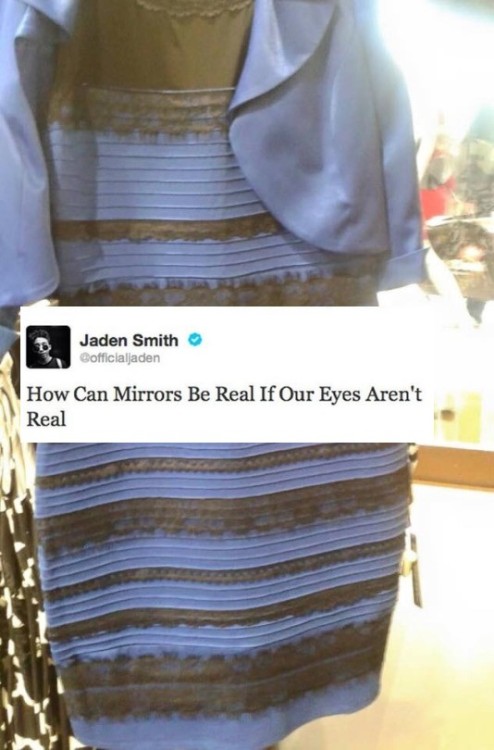
Are the words I have typed on this post black? Are colors you see in the background hues of blue and purple? I'm not even sure if I can give you an answer to those questions. For all I know, there is somebody out there who might see the colors on this page as gold and white. But if I firmly make a statement on what I see, that the text color is indeed black, and the background is a splatter of blue and purple, am I writing some sort of fiction to those who see differently?
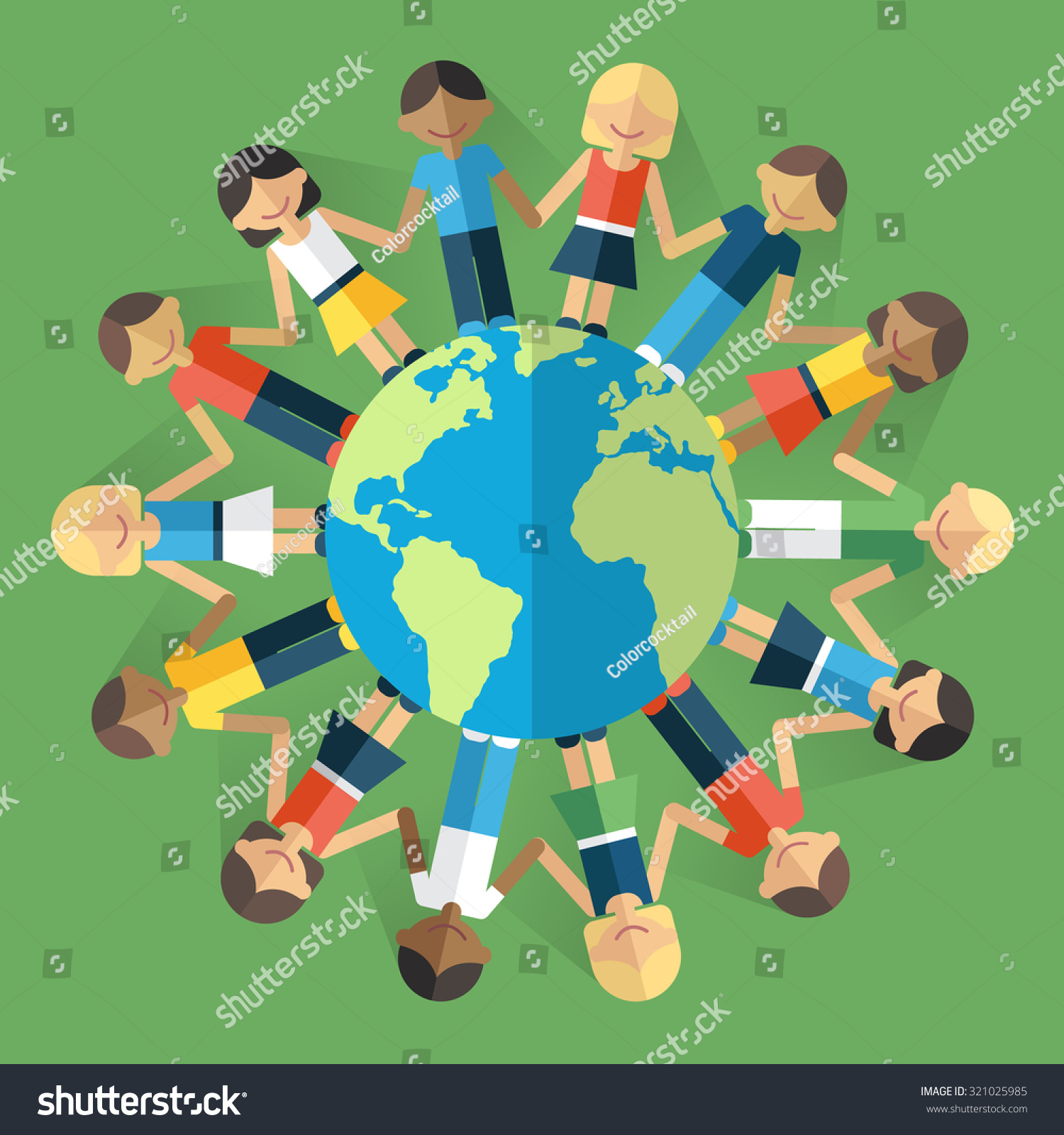
Everyone is standing on the edge of the Earth. Everyone's feet is planted on a spherical surface. Everyone is the same distance from the core of the Earth. What's different? The angle, or the perspective, in which they are standing at is what's different. Some are probably craving some ice cream under that 90-degree weather. Some are probably running from an incoming tsunami. Some may be hibernating in bed through a dark snowstorm. It seems like they are all standing under same conditions with no additional variables, but once you enter their perspective, what you see is entirely different.
"...If Our Eyes Aren't Real." What does that even mean? I believe most human beings have two spheroidal structures with a retina, shelled with the sclera, which is shielded by a transparent cornea. They are fully functional, despite the varying degrees(considering the degradation that occurs with age). Hence, we, humans, are capable of seeing things through our own eyes. However, the question is how we report what we see. With two or three accounts, an individual's theory could become a center of mockery or a well-written piece of fiction. With this in mind, it is fair to say that without the truths that people assert on a daily basis, there would be no such existence as fiction. Since there are so many "truths" on a same idea, would they still be considered truths? They are more like a perspective of the truth. At the moment when you register what you see, thoughts and words come into mind. There would be no surprise if the nouns and adjectives circling your head differs from the person next to you.
Now I'm going to try to make a connection that may make perfect sense or no sense at all, but here it is. Let's take a globe, for example. The Earth. Pretend there is an invisible layer that covers the Earth to make a perfect spherical surface. Take couple hundred or even thousands of people and place them on the globe standing.
| Thank you shutterstock:P |
__________________________________________________________
The line between fact and fiction can also be seen in the book The Things They Carried. Tim O'Brien broke the barrier between fact and fiction. He drew readers into thinking his novel is a true story by making such realistic actions and a dedication that reads, "This book is lovingly dedicated to the men of Alpha Company, and in particular to Jimmy Cross, Norman Bowker, Rat Kiley, Mitchell Sanders, Henry Dobbins, and Kiowa." But in the title page it clearly says "A work of fiction by Tim O'Brien." He did inform his readers that what they will see is a complete work of fiction, but at the same time, he wanted his readers to feel the reality of war. O'Brien masterfully executed his fiction retelling of a true war experience.
It's fiction that it's a fact.
It's a fact that it's fiction.
Who knows? Maybe 1984's Oceania is right about 2+2 equaling 5...
Subscribe to:
Comments (Atom)